
The Costa Quebrada Association
–
–
The Costa Quebrada Association emerged in the early 2000s as a citizen-led initiative promoted by Jesús Mojas. Captivated by the coastal landscapes of Cantabria, he launched a series of environmental awareness activities. He was soon joined by geologist Antonio Cendrero, who helped explain and highlight the geological uniqueness of a landscape they both deeply admired.
A defining moment in the Association’s history came in 2002, in the aftermath of the Prestige oil spill. Local volunteers came together to clean the beaches, strengthening a collective sense of responsibility and reinforcing the commitment to protecting the coastline.
Over time, the original volunteer group evolved into a professional organisation. Its first headquarters were established in municipal facilities provided by local councils, including the RADA building in 2007. Later, in 2018, the Association opened a tourism office and an environmental education centre in Soto de la Marina. The Association has structured its work around strategic lines that include participation, education, awareness-raising, inclusion, research, conservation, outreach and tourism.
In 2025, after years of collaboration with local institutions and the University of Cantabria, the Costa Quebrada Association achieved official recognition from UNESCO, naming Costa Quebrada a Global Geopark and highlighting both its unique geological heritage and the community’s commitment to its preservation.
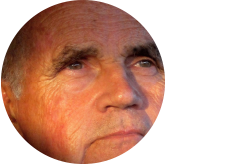
Through his poetry, he gave the territory its name: Costa Quebrada.
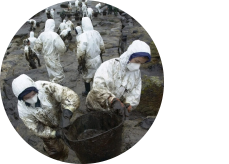
The coastline was covered in oil.
The non-profit conservation association is founded.
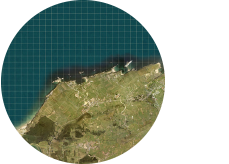
The creation of interpretive resources and guided tours begins, and Costa Quebrada gains visibility.
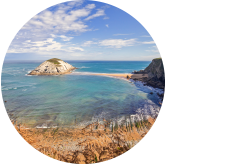
The area’s high scientific and educational value
receives its first major recognition.
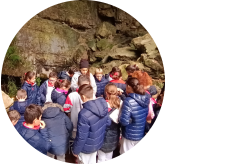
After two previous attempts, Costa Quebrada submits its definitive application to become a Geopark.

On 11 April 2025, UNESCO officially recognised Costa Quebrada as a UNESCO Global Geopark.
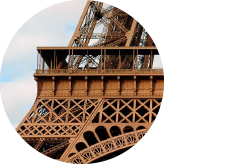
On 2 June 2025, the UNESCO certificate was formally received in Paris.
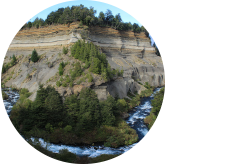
On 8 September, participation in the international Geoparks Congress.


Actividades y reservas: (+34) 604 455 946
Área de Educación: (+34) 681 628 884
Horario de atención: 9:30-17:00h.